“We’re champions, daddy.” Those words, spoken through tears by Mikel Arteta’s eldest son Gabriel, captured not only the essence of a family’s joy but also the culmination of a footballing odyssey that spanned more than two decades. Arsenal’s first Premier League title in 22 years was not simply a sporting achievement; it was a deeply human story of resilience, vulnerability, and redemption. For Arteta, the defining image of that night was not the roar of the Emirates or the jubilation at London Colney, but the quiet embrace of his children in the garden of his home, a moment that revealed the emotional core of a manager often seen as relentlessly intense and uncompromising.
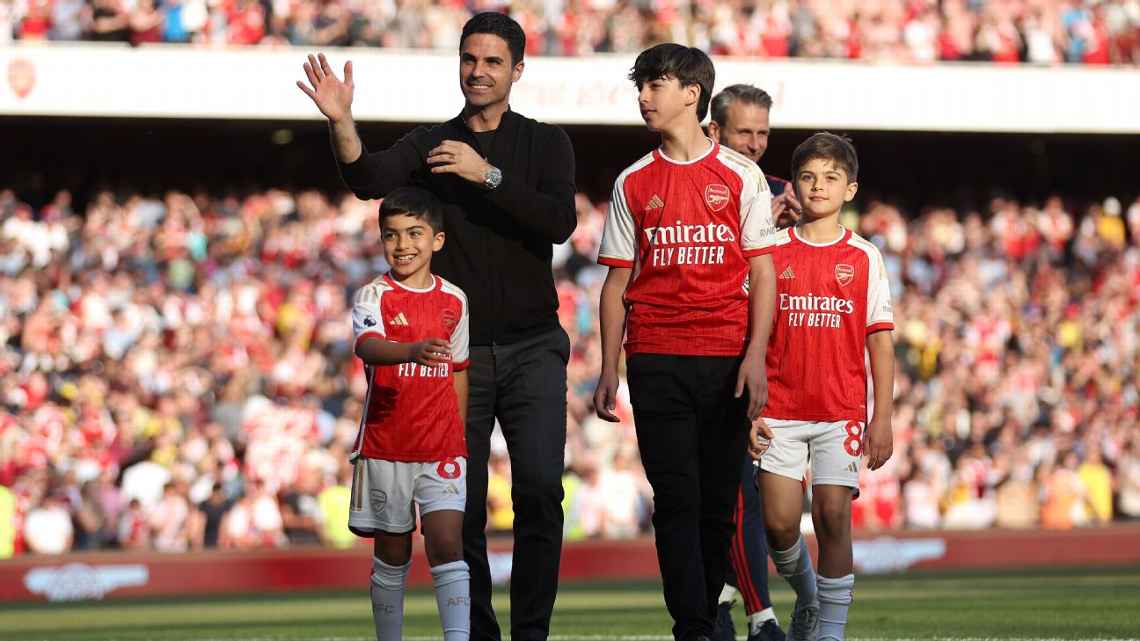
Arteta’s confession about that evening was startling in its honesty. He admitted that the pressure of Manchester City’s decisive fixture against Bournemouth was too much to bear. “I was supposed to be at London Colney watching the game with the boys and certain staff, but I couldn’t do it,” he revealed. The weight of expectation, the possibility of heartbreak, and the sheer magnitude of the occasion drove him away from the training ground. Instead, he sought refuge in solitude, driving home and lighting a fire in his garden. The act of building a barbecue was not about celebration but distraction, a way to occupy his hands and mind while fate unfolded elsewhere. “Before the game, I had to leave. I couldn’t bring the energy that I wanted,” he admitted, offering a rare glimpse into the vulnerability of a man tasked with carrying the hopes of millions.
The release came not through his own eyes but through the voice of his son. Gabriel, just sixteen, burst into the garden, tears streaming down his face, and delivered the words that would echo in Arteta’s memory forever: “We’re champions, daddy.” In that instant, years of criticism, doubt, and relentless effort dissolved into a sacred family celebration. Soon, his younger sons and wife joined, transforming the garden into a sanctuary of joy. “My oldest son ran towards me, crying, and hugged me. Then the others came. That moment was truly sacred,” Arteta recalled. It was a reminder that football, for all its tactical sophistication and global spectacle, is ultimately about human connection—the bonds between fathers and sons, between managers and players, between clubs and their supporters.

The symbolism of Arteta’s retreat and revelation runs deep. Here was a manager who had rebuilt Arsenal from the ground up, instilling discipline, belief, and resilience into a squad that had long struggled to recapture its identity. Yet when the decisive moment arrived, he could not bear to watch. That vulnerability underscores the immense psychological toll of leadership in modern football. Managers are expected to embody strength and certainty, but Arteta’s story reveals the fragility beneath the surface. His inability to watch was not weakness but a testament to the depth of his investment, the magnitude of the stakes, and the humanity that defines even the most successful leaders.
For Arsenal supporters, the image of their manager huddled by a fire, waiting for fate to unfold, resonates profoundly. It mirrors the decades of waiting endured by fans—the countless nights of hope and despair, the longing for a return to glory. Just as Arteta sought refuge in his garden, supporters sought refuge in belief, clinging to the idea that one day the drought would end. When Gabriel delivered the news, it was not just a family victory; it was the culmination of a collective dream. “This title is not just about football; it’s about faith, about resilience, about never giving up,” Arteta said, capturing the essence of a season that will be remembered as much for its emotional depth as its sporting achievement.

The broader context of this moment also speaks to the shifting narrative of Arsenal’s identity. For years, the club had been defined by near misses, by the shadow of past glories, and by the dominance of rivals like Manchester City. Arteta’s journey was about more than tactics; it was about restoring pride, rebuilding culture, and convincing players and fans alike that Arsenal could once again stand at the pinnacle. His family’s embrace symbolized that restoration. It was not a corporate celebration or a manufactured spectacle, but a raw, intimate moment that embodied the authenticity of Arsenal’s resurgence.
What makes this story so compelling is its universality. Every supporter, every player, every coach has known the agony of waiting, the fear of disappointment, and the ecstasy of triumph. Arteta’s garden fire is a metaphor for the countless coping mechanisms fans have employed over the years—turning off the television, pacing nervously, clinging to rituals in the hope of influencing fate. His son’s words, “We’re champions, daddy,” are the echo of millions of voices around the world, each proclaiming the end of a long drought and the beginning of a new era.
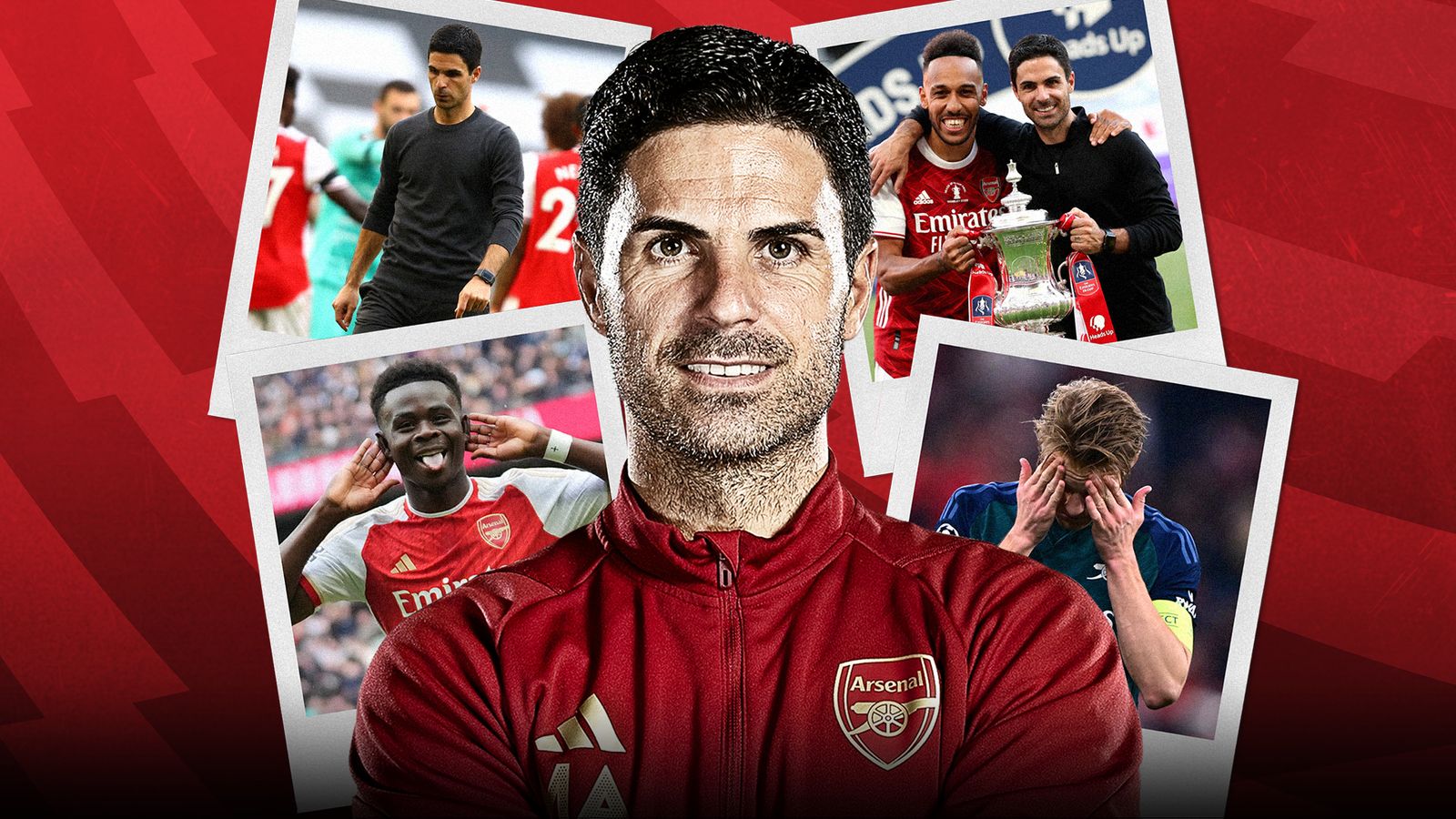
The resonance of this moment also lies in its juxtaposition of the ordinary and the extraordinary. A father tending a fire in his backyard is an image of domestic simplicity, yet layered upon it was the extraordinary weight of history. Arsenal’s triumph was not just another trophy; it was the culmination of years of rebuilding, of countless hours on the training ground, of tactical innovations and cultural shifts. Arteta’s decision to step away from the collective tension of London Colney and face the moment alone speaks to the solitude of leadership. Even surrounded by staff and players, the burden ultimately rests on the manager’s shoulders. His retreat to the garden was a way of confronting that solitude, of finding space to breathe amid suffocating pressure.
This title also redefines Arteta’s legacy. When he took over in December 2019, Arsenal were a club adrift, struggling to find consistency and identity. His tenure was marked by skepticism, criticism, and the constant comparison to past glories. Yet through patience, conviction, and an unyielding belief in his methods, he reshaped the team. The embrace of his family on the night of triumph symbolized not only personal vindication but also the validation of a philosophy. “We had to restore pride, we had to restore belief,” he once said. That restoration was not achieved in a single season but through years of incremental progress, setbacks, and resilience.
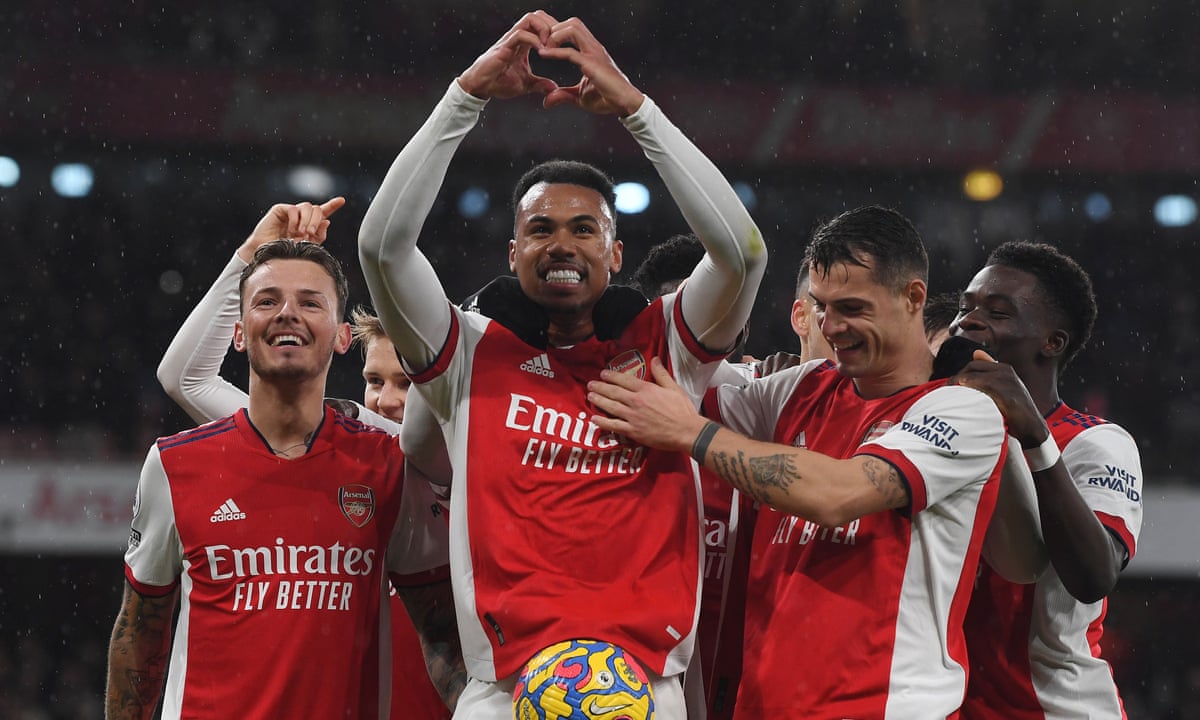
The story of Arsenal’s 2025/2026 title is inseparable from the story of Mikel Arteta’s garden fire. It is a tale of anxiety and release, of vulnerability and triumph, of a father and his children sharing the most important victory of his career. It reminds us that football’s greatest moments are not only written in stadiums or on scoreboards, but in the quiet corners of life where human emotion takes center stage. Arteta’s confession, his son’s words, and the family’s embrace will endure as one of the most poignant chapters in Arsenal’s history—a reminder that behind every trophy lies a story of belief, resilience, and love.
And perhaps that is why this triumph feels so different, so enduring. Arsenal’s return to the summit of English football was not just about tactical mastery or the brilliance of individual players, but about the restoration of a spirit that had been tested, doubted, and nearly forgotten. Arteta’s journey from a young coach in 2019 to the architect of a title-winning side in 2026 mirrors the club’s own path from uncertainty to conviction. His garden fire, his son’s tears, and his family’s embrace are not anecdotes on the periphery of victory—they are the very heart of it. They remind us that football is lived not only in the glare of floodlights but in the quiet spaces where hope and fear collide, where the human side of the game reveals itself most clearly. Arsenal’s title will be remembered for the goals, the matches, and the celebrations, but above all, it will be remembered for the night when a father heard his son say, “We’re champions, daddy,” and realized that the dream had finally come true.