Emmanuel Petit’s explosive claim that Arsenal would have been reduced to a “laughing stock” without Bukayo Saka has ignited one of the most heated debates in recent memory, cutting to the heart of what defines success in modern football. His words, delivered with the bluntness that has long characterized his commentary, struck a nerve because they challenge the delicate balance between celebrating individual brilliance and recognizing collective strength. For Arsenal fans, the statement is both flattering and unsettling: flattering because it acknowledges Saka’s extraordinary influence, unsettling because it suggests the club’s triumphs rest precariously on the shoulders of a single player.

To fully grasp the weight of Petit’s assertion, one must consider the role Saka has played in Arsenal’s resurgence. At just 24 years old, he has become the face of the club, a homegrown star whose consistency, creativity, and courage have carried Arsenal through its most defining moments. His goals and assists have often been the difference between victory and defeat, his relentless energy a constant reminder of what Hale End can produce. “He’s the heartbeat of Arsenal,” one supporter wrote, echoing the sentiment of thousands who see Saka not just as a player but as the embodiment of the club’s identity. Petit’s claim, then, is not without merit. Without Saka’s contributions, Arsenal’s campaign might have faltered. Yet the controversy lies in the implication that the rest of the squad is secondary, that Arsenal’s triumph is less about collective resilience and more about one man’s brilliance.
This tension is particularly sharp because Arsenal’s 2026 Premier League title was built on teamwork. Mikel Arteta’s system emphasizes discipline, pressing, and cohesion, with players like Martin Ødegaard, Declan Rice, William Saliba, and Gabriel Jesus all playing crucial roles. To suggest Arsenal would have been a “laughing stock” without Saka risks diminishing the contributions of these players, who each delivered performances that shaped the season. Ødegaard’s leadership in midfield, Rice’s dominance in defensive transitions, and Saliba’s composure at the back provided the structure within which Saka could shine. “Football is never about one man,” Arteta reminded reporters earlier this year. “It’s about the collective, the trust, the sacrifice. Bukayo is special, but he is part of something bigger.” That quote underscores the paradox at the heart of the debate: Saka’s brilliance is undeniable, but Arsenal’s success is inseparable from the collective strength Arteta has cultivated.
.jpg?auto=webp&format=pjpg&width=3840&quality=60)
Petit’s words also resonate historically. Arsenal has always been defined by its icons — Tony Adams, Thierry Henry, Dennis Bergkamp — but its greatest triumphs were collective achievements. The Invincibles of 2004 were not just about Henry’s goals but about the balance provided by Patrick Vieira, the defensive solidity of Sol Campbell, and the creativity of Robert Pirès. To frame Arsenal’s current success as dependent on Saka alone risks distorting that tradition. Yet it also reflects the reality of modern football, where star players often bear disproportionate responsibility. Lionel Messi at Barcelona, Cristiano Ronaldo at Real Madrid, and Mohamed Salah at Liverpool all carried similar burdens. Petit’s claim, then, is not entirely misplaced; it is a recognition of the way Saka has become Arsenal’s talisman, the player who embodies both hope and expectation.
The reaction among fans has been deeply divided. Some embrace Petit’s statement as a testament to Saka’s greatness, arguing that his influence is so profound that Arsenal’s fortunes rise and fall with him. “Without Saka, we’re ordinary,” one supporter declared. “With him, we’re champions.” Others bristle at the suggestion, insisting that it diminishes the collective effort that has brought Arsenal back to glory. “This team is more than one player,” another fan countered. “Saka is brilliant, but look at Rice, look at Ødegaard, look at Saliba. They all carried us.” The clash of perspectives reflects the broader tension in football discourse: the desire to celebrate individual brilliance while acknowledging the collective foundation that makes it possible.
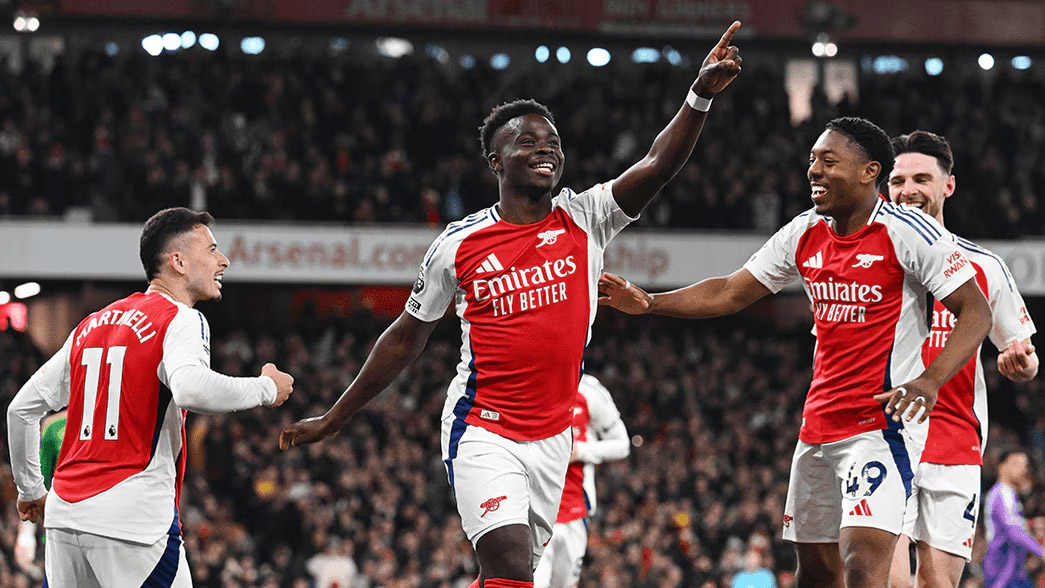
For Saka himself, the debate is both flattering and burdensome. To be hailed as the savior of Arsenal is an honor, but it also places immense pressure on his shoulders. Every performance is scrutinized, every mistake magnified. The danger, as some pundits have warned, is that the narrative of dependence could become self‑fulfilling, creating unrealistic expectations that weigh heavily on a young player. Petit himself later clarified: “Bukayo is extraordinary, but Arsenal must ensure they don’t rely too much on him. A team chasing trophies cannot depend on one man alone.” That caveat underscores the complexity of his claim: it is both a celebration of Saka’s brilliance and a warning about the risks of overreliance.
The broader question raised by Petit’s statement is whether Arsenal’s success is sustainable. If the team is indeed too dependent on Saka, then injuries, fatigue, or loss of form could derail their ambitions. But if Saka’s brilliance is integrated into a collective framework, then Arsenal’s future looks secure. The Champions League semifinal and final loom as the ultimate test. Europe’s elite competition demands depth, resilience, and adaptability. Saka will undoubtedly play a central role, but Arsenal’s ability to succeed will depend on the contributions of the entire squad. The debate sparked by Petit’s words, then, is not just about Saka; it is about the identity of Arsenal itself, about whether the club’s rebirth is built on one man’s shoulders or on the strength of a collective.

What makes this controversy so compelling is that it touches on the essence of football itself. The sport thrives on narratives of heroes and saviors, but it is ultimately a team game. Saka’s brilliance is undeniable, and his role in Arsenal’s resurgence is historic. But to reduce Arsenal’s success to his presence alone is to overlook the sacrifices, the discipline, and the unity that have defined their journey. Petit’s claim has divided fans because it forces them to confront a paradox: Arsenal’s triumph is both the story of one extraordinary player and the story of a collective reborn. As one pundit put it, “Saka is the spark, but Arsenal is the fire. Without the team, the spark dies. Without the spark, the fire never starts.” That sentiment captures the truth at the heart of the debate, a truth that will continue to shape Arsenal’s story as they march toward Europe’s greatest stage.